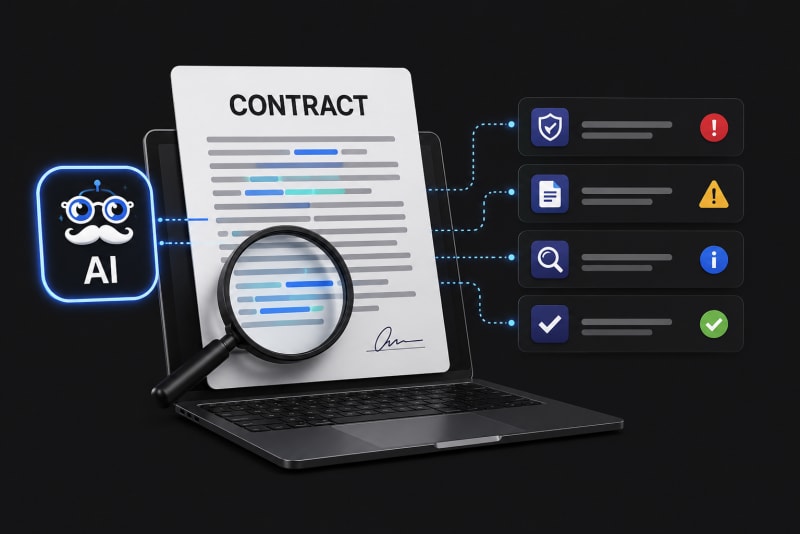


In healthcare and medical research, time is not just money, it’s lives. Physicians, clinical researchers, healthcare administrators, and medical writers constantly deal with massive volumes of research papers, clinical guidelines, patient records, and regulatory documents.
An AI research assistant is transforming how medical professionals access, analyse, and apply information. Instead of manually reviewing hundreds of pages, teams can now extract insights in minutes, accurately and securely.
This use case explores the top 5 AI research assistant benefits specifically for the healthcare and medical industry.
1. Faster Literature Reviews and Clinical Research
The Challenge
Medical research moves rapidly. Thousands of papers are published every month across journals and databases. Conducting systematic literature reviews manually is time-consuming and resource intensive.
The Solution
- - Scan large volumes of clinical studies
- - Identify relevant papers based on keywords
- - Summarize findings instantly
- - Extract key outcomes, methodologies, and conclusions
Healthcare Use Case
A clinical research team studying a new diabetes treatment uploads 200 research papers into an AI research assistant tool. Within minutes, the system:
- - Identifies common treatment outcomes
- - Highlights conflicting study results
- - Extracts sample sizes and statistical relevance
- - Generates a summarized report
This dramatically reduces review time from weeks to hours.
For more examples of how this technology applies to specific industries, check out our AI For Healthcare Use Case guide.
2. Improved Accuracy and Reduced Human Error
The Challenge
Manual data extraction can lead to missed insights, incorrect interpretation, and overlooked compliance requirements. In healthcare, small errors can have serious consequences.
The Solution
One of the key benefits of AI research assistant technology is its ability to:
- - Cross-check data consistently
- - Highlight inconsistencies
- - Detect missing data points
Extract structured information from unstructured text
Healthcare Use Case
A hospital’s compliance team uses an AI research assistant to review updated treatment guidelines. The tool automatically compares new protocols with existing hospital SOPs and flags discrepancies, ensuring regulatory alignment. This reduces risk and improves patient safety.
3. Better Decision-Making with Data-Driven Insights
The Challenge
Healthcare executives often struggle with fragmented data spread across research publications, EHR systems, internal reports, and policy documents.
The Solution
An AI research assistant tool consolidates information and provides:
- - Evidence-backed summaries
- - Trend analysis
- - Comparative study insights
- - Risk-benefit breakdowns
Healthcare Use Case
A healthcare administrator evaluating a new oncology treatment uses an AI assistant for research to:
- - Compare survival rates across multiple studies
- - Analyse cost-effectiveness data
- - Review side-effect profiles
- - Summarize peer-reviewed evidence
Instead of reading 50 separate papers, the executive receives structured insights in one report, supporting faster, more confident decisions.
4. Enhanced Productivity for Medical Professionals
The Challenge
Doctors and researchers already face heavy workloads in terms of patient care, documentation, research responsibilities, and administrative tasks. Time spent searching for information reduces time spent on patient care.
The Solution
Among the strongest AI research assistant benefits is productivity enhancement. The tool like Ask the Genie can:
- - Provide instant answers from uploaded medical documents
- - Summarize long clinical trial reports
- - Extract specific data points (dosage, outcomes, trial phases)
- - Generate draft summaries for internal presentations
Healthcare Use Case
A cardiologist preparing for a medical conference uploads recent heart failure studies into an AI research assistant. The tool extracts:
- - Trial methodology
- - Key statistical findings
- - Comparative treatment outcomes
The doctor prepares a presentation in hours instead of days.
5. Secure Knowledge Management and Institutional Learning
The Challenge
Healthcare organizations generate massive internal documentation such as clinical protocols, training manuals, research findings, policy updates, etc. Finding specific information across thousands of pages is difficult.
The Solution
- - A secure AI research assistant tool can:
- - Index internal knowledge repositories
- - Allow teams to ask natural-language questions
- - Provide answers only from approved documents
- - Maintain data privacy and compliance
Healthcare Use Case
A multi-specialty hospital deploys an internal AI assistant for research to centralize:
- - Treatment guidelines
- - Infection control protocols
- - Internal research publications
Doctors can ask: What is our updated sepsis management protocol?
The tool provides answers strictly from internal documentation, ensuring consistency and compliance.
Why Healthcare Organizations Need an AI Research Assistant Now?
Healthcare is becoming more data-driven every year. With increasing regulatory pressure, growing patient volumes, and expanding research output, manual knowledge management is no longer sustainable.
The benefits of AI research assistant adoption include:
- - Faster research cycles
- - Improved compliance
- - Better clinical decisions
- - Reduced operational risk
- - Higher productivity
For hospitals, pharmaceutical companies, CROs, and medical institutions, an AI research assistant is not just a convenience; it is becoming a strategic necessity.
Final Thoughts
The healthcare and medical industry operates in a high-stakes environment where decisions must be accurate, evidence-based, and timely.
An advanced AI research assistant tool empowers medical professionals to work smarter, not harder. From accelerating literature reviews to improving compliance and enabling data-driven executive decisions, the Ai research assistant benefits are both immediate and long-term.