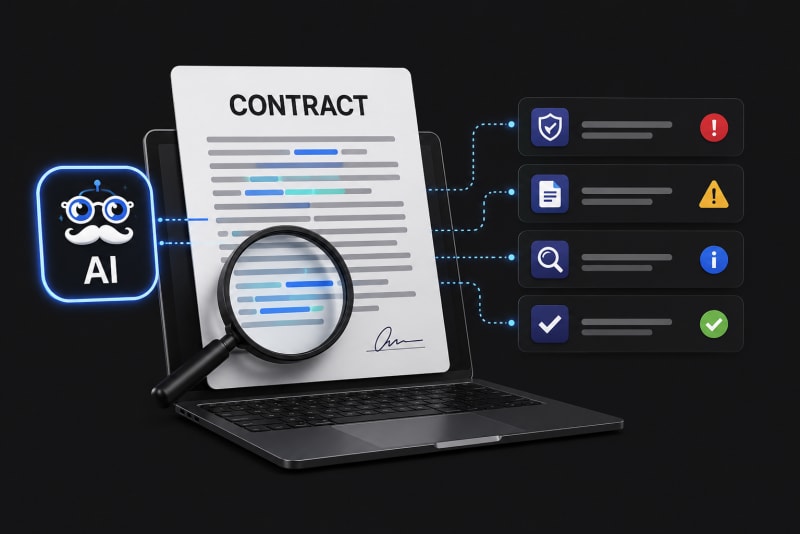


Healthcare organizations manage thousands of documents every day, including patient records, clinical guidelines, insurance forms, compliance policies, and operational manuals. Finding the right information quickly can be difficult, especially when teams rely on multiple systems and large document repositories.
This is where HIPAA-compliant AI document tools make a significant difference. These solutions help healthcare providers search, organize, and retrieve information using artificial intelligence while maintaining strict security and privacy standards. Instead of manually searching through folders and databases, clinicians and administrative teams can ask questions in natural language and receive accurate, permission-based answers within seconds.
If implemented correctly, HIPAA-compliant AI helps organizations improve efficiency without putting protected health information (PHI) at risk.
What Is HIPAA-Compliant AI?
HIPAA-compliant AI refers to artificial intelligence solutions designed to meet the security, privacy, and administrative requirements established under the Health Insurance Portability and Accountability Act (HIPAA).
Unlike standard AI applications, HIPAA-compliant platforms include safeguards such as:
End-to-end encryption
Role-based access controls
Audit logs and activity tracking
Secure cloud infrastructure
Data retention and deletion policies
Business Associate Agreements (BAAs)
These protections allow healthcare organizations to use AI while maintaining compliance with federal regulations.
Why Do Healthcare Organizations Need HIPAA-Compliant AI Document Tools?
Healthcare professionals spend a significant amount of time searching for information across disconnected systems. Clinical protocols may exist in one application, compliance documents in another, and internal policies somewhere else entirely.
HIPAA-compliant AI document tools simplify this process by bringing trusted knowledge into one searchable environment. Instead of searching multiple databases manually, users can ask questions like:
What is our latest patient discharge protocol?
Where can I find our telehealth consent policy?
What documentation is required before prior authorization?
The AI retrieves information only from approved sources while respecting user permissions and protecting sensitive data. This reduces administrative effort and helps teams make informed decisions faster.
How Does HIPAA-Compliant Document Search Improve Healthcare Operations?
Faster Information Retrieval
Finding the right document should not take several minutes when patient care depends on quick decisions. HIPAA-compliant document search allows healthcare professionals to locate policies, procedures, and clinical references through conversational search instead of navigating complex folder structures.
Improved Compliance
Healthcare organizations frequently update internal policies to reflect changing regulations and clinical standards. With AI-powered document search, employees are directed to the most recent approved documentation, reducing the risk of using outdated procedures.
Better Collaboration Across Departments
Medical, billing, compliance, legal, and administrative teams often need access to shared knowledge. Rather than maintaining separate copies of documents, AI provides a centralized experience where authorized users can quickly retrieve consistent information from approved repositories. This improves communication while maintaining security controls.
Building a Healthcare AI Knowledge Base
A healthcare AI knowledge base serves as the foundation for intelligent document search. Instead of simply storing files, the AI understands the context, relationships, and meaning of documents. This enables users to ask questions in plain language and receive accurate, relevant answers. A well-designed healthcare AI knowledge base may include:
Clinical protocols
Standard operating procedures
Treatment guidelines
HR policies
Insurance documentation
Compliance manuals
Internal knowledge articles
Training materials
By connecting multiple document sources into one intelligent system, organizations create a single source of truth for employees.
Key Features to Look for in HIPAA-Compliant AI Document Tools
Not every AI document platform is designed for healthcare. When evaluating solutions, organizations should look for features that support both productivity and compliance.
Secure Data Protection
The platform should encrypt data both in transit and at rest while preventing unauthorized access to sensitive healthcare information.
Intelligent Search
An advanced HIPAA-compliant document search should understand natural language instead of relying solely on exact keyword matching. For example, searching for patient intake forms should also surface related admission documentation and registration policies.
Role-Based Permissions
Users should only access documents that match their organizational role. Physicians, nurses, administrators, and compliance officers often require different levels of access.
Integration with Existing Systems
The best HIPAA-compliant AI document tools integrate with electronic health record (EHR) systems, document management platforms, cloud storage, and internal knowledge repositories without disrupting existing workflows.
Source Attribution
AI-generated responses should reference the original document, so users can verify information before acting.
Benefits of HIPAA-Compliant AI for Healthcare Organizations
Implementing HIPAA-compliant AI provides measurable advantages across both clinical and administrative operations. Some of the most valuable benefits include:
Faster document retrieval
Better employee productivity
Reduced administrative workload
Improved compliance with HIPAA requirements
Secure access to organizational knowledge
More consistent decision-making
Lower risk of human error
Improved onboarding for new employees
As healthcare organizations continue generating larger volumes of information, AI becomes an essential tool for managing knowledge efficiently.
The Future of Healthcare AI Knowledge Bases
Healthcare is moving beyond traditional document storage toward intelligent knowledge management. Modern healthcare AI knowledge base platforms do more than index documents. They understand context, connect related information, summarize lengthy content, and help users discover answers quickly while maintaining strict security controls.
As generative AI continues to mature, healthcare organizations will increasingly rely on secure AI assistants that can retrieve trusted information, answer operational questions, and support clinical teams without exposing sensitive patient data. The focus will remain on balancing innovation with compliance, ensuring organizations benefit from AI while protecting patient privacy.
Conclusion
Healthcare organizations cannot afford to sacrifice security for efficiency. HIPAA-compliant AI document tools provide a practical way to improve access to knowledge while maintaining compliance with strict healthcare regulations.
By combining HIPAA-compliant document search, secure access controls, and an intelligent healthcare AI knowledge base, organizations can reduce manual effort, improve collaboration, and help employees find trusted information in seconds.
As the adoption of HIPAA-compliant AI continues to grow, healthcare providers that invest in secure, AI-powered document management will be better positioned to enhance operational efficiency, support better decision-making, and protect sensitive patient information at every step.